What You Would Do In This Situation?
Mr.X wants to check how people react to prodigy in 'Morning Rush Hours'. So, he appoints World Best Guitarist to do some plays in front of Mumbai Metro Station..
Thousands!..Even Millions passes by, but very few of them listened to music & applaud. Nearly 80% of people doesn't recognize real talent at haste.
Then that guitarist feels, Why i am here??...Like this things so many of us losing our Talents..
“What is this life if, full of care, We have no time to stand and stare.” – from “Leisure,” by W.H. Davies. Have you ever stopped to consider how many magical moments are passing you by daily? Instead of living through our self absorbed little world’s, maybe it’s time to be a little more attentive to the moments that’s being created all around us..Enjoy each & every little Magics
Monday, September 20, 2010

Learn The Law Of Garbage Truck
I really loved ths article. I wish to share ths things with all. Pls leave ur comment after reading posts. All Izz Well.
How often do you let other people’s nonsense change your mood? Do you let a bad driver, rude waiter, curt boss or an insensitive employee ruin your day? Unless you’re the Terminator, you’re probably set back on your heels. However, the mark of your success is how quickly you can refocus on what’s important.
Sixteen years ago I learned this lesson. And I learned it in the back of a New York City taxi cab. Here’s what happened:
I hopped in a taxi, and we took off for Grand Central Station. We were driving in the right lane when all of a sudden a black car jumped out of a parking space right in front of us. My taxi driver slammed on his breaks, the car skidded, the tires squealed and at the last moment the car stopped just one inch from the other car’s back-end.
And what did we see next? The driver of the other car, the guy who almost caused a big accident, whipped his head around and he started swearing at us. How do I know? Ask any New Yorker, some words in New York come with a special face
And then here’s what blew me away. My taxi driver just smiled and waved at the guy. And I mean, he was friendly. So, I said, “Why did you just do that!? This guy could have killed us!” And this is when my taxi driver told me what I now call, “The Law of the Garbage Truck.” He said:
Many people are like garbage trucks. They run around full of garbage, full of frustration, full of anger, and full of disappointment. As their garbage piles up, they need a place to dump it. And if you let them, they’ll dump it on you.
So when someone wants to dump on you, don’t take it personally. Just smile, wave, wish them well and move on. Believe me. You’ll be happier.
So I started thinking, how often do I let Garbage Trucks run right over me? And how often do I take their garbage and spread it to other people at work, at home or on the street? It was then that I said, “I don’t want the garbage and I’m not going to spread it anymore.”
I began to see Garbage Trucks. Like in the movie “The Sixth Sense,” where the little boy said, “I see Dead People.” Well now “I see Garbage Trucks.” I see the load they’re carrying. I see them coming to drop it off. And like my taxi driver, I don’t take it personally; I just smile, wave, wish them well and move on.
The bottom line is that successful people do not let Garbage Trucks take over their day. What about you? What would happen in your life, starting today, if you let more Garbage Trucks pass you by?
And my taxi driver was right. I am happier.
How often do you let other people’s nonsense change your mood? Do you let a bad driver, rude waiter, curt boss or an insensitive employee ruin your day? Unless you’re the Terminator, you’re probably set back on your heels. However, the mark of your success is how quickly you can refocus on what’s important.
Sixteen years ago I learned this lesson. And I learned it in the back of a New York City taxi cab. Here’s what happened:
I hopped in a taxi, and we took off for Grand Central Station. We were driving in the right lane when all of a sudden a black car jumped out of a parking space right in front of us. My taxi driver slammed on his breaks, the car skidded, the tires squealed and at the last moment the car stopped just one inch from the other car’s back-end.
And what did we see next? The driver of the other car, the guy who almost caused a big accident, whipped his head around and he started swearing at us. How do I know? Ask any New Yorker, some words in New York come with a special face
And then here’s what blew me away. My taxi driver just smiled and waved at the guy. And I mean, he was friendly. So, I said, “Why did you just do that!? This guy could have killed us!” And this is when my taxi driver told me what I now call, “The Law of the Garbage Truck.” He said:
Many people are like garbage trucks. They run around full of garbage, full of frustration, full of anger, and full of disappointment. As their garbage piles up, they need a place to dump it. And if you let them, they’ll dump it on you.
So when someone wants to dump on you, don’t take it personally. Just smile, wave, wish them well and move on. Believe me. You’ll be happier.
So I started thinking, how often do I let Garbage Trucks run right over me? And how often do I take their garbage and spread it to other people at work, at home or on the street? It was then that I said, “I don’t want the garbage and I’m not going to spread it anymore.”
I began to see Garbage Trucks. Like in the movie “The Sixth Sense,” where the little boy said, “I see Dead People.” Well now “I see Garbage Trucks.” I see the load they’re carrying. I see them coming to drop it off. And like my taxi driver, I don’t take it personally; I just smile, wave, wish them well and move on.
The bottom line is that successful people do not let Garbage Trucks take over their day. What about you? What would happen in your life, starting today, if you let more Garbage Trucks pass you by?
And my taxi driver was right. I am happier.
Monday, May 31, 2010
Word Of Decade
Google named 'Word Of Decade'
Technology.am (Jan 14, 2010) — Google has been named the “word of the decade” by a grouping of American speech scholars.
In its yearly Word of the Year vote, the American Dialect Society (ADS) said that the word ‘tweet’, derived from sending a short message by means of Twitter (noun) and the act of sending such a message (verb) was the top word of 2009, reports the Telegraph.
 The society said the usage of the word Google, a verb that means to “to explore the Internet”, came because just about everyone in the world uses the term nowadays.
The ADS chooses words for their current importance or notability in American English.
Other word-of-the-year nominees included ‘H1N1’ (the virus that causes swine flu) and ‘Dracula sneeze’, which is covering one’s mouth with the crook of one’s elbow when sneezing.
Nominees for word of the decade included ‘9/11,’ ‘blog,’ ‘green,’ ‘text,’ ‘war on terror,’ and ‘Wi-Fi.’
Technology.am (Jan 14, 2010) — Google has been named the “word of the decade” by a grouping of American speech scholars.
In its yearly Word of the Year vote, the American Dialect Society (ADS) said that the word ‘tweet’, derived from sending a short message by means of Twitter (noun) and the act of sending such a message (verb) was the top word of 2009, reports the Telegraph.
The society said the usage of the word Google, a verb that means to “to explore the Internet”, came because just about everyone in the world uses the term nowadays. The ADS chooses words for their current importance or notability in American English.
Other word-of-the-year nominees included ‘H1N1’ (the virus that causes swine flu) and ‘Dracula sneeze’, which is covering one’s mouth with the crook of one’s elbow when sneezing.
Nominees for word of the decade included ‘9/11,’ ‘blog,’ ‘green,’ ‘text,’ ‘war on terror,’ and ‘Wi-Fi.’
Future of Internet Search
Pictures say more than words….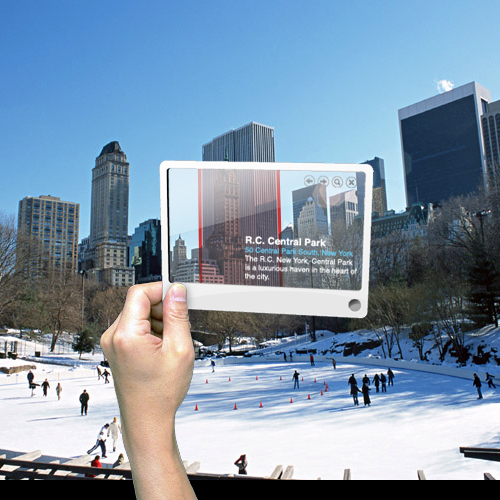


Isn’t this simply amazing.. Never thought about a display in this way..
The History of the Internet in a Nutshell
If you’re reading this article, it’s likely that you spend a fair amount of time online. However, considering how much of an influence the Internet has in our daily lives, how many of us actually know the story of how it got its start?
Here’s a brief history of the Internet, including important dates, people, projects, sites, and other information that should give you at least a partial picture of what this thing we call the Internet really is, and where it came from.

While the complete history of the Internet could easily fill a few books, this article should familiarize you with key milestones and events related to the growth and evolution of the Internet between 1969 to 2009.

Arpanet was the first real network to run on packet switching technology (new at the time). On the October 29, 1969, computers at Stanford and UCLA connected for the first time. In effect, they were the first hosts on what would one day become the Internet.
The first message sent across the network was supposed to be "Login", but reportedly, the link between the two colleges crashed on the letter "g".

Another major milestone during the 60’s was the inception of Unix: the operating system whose design heavily influenced that of Linux and FreeBSD (the operating systems most popular in today’s web servers/web hosting services).

Email was first developed in 1971 by Ray Tomlinson, who also made the decision to use the "@" symbol to separate the user name from the computer name (which later on became the domain name).

One of the most impressive developments of 1971 was the start of Project Gutenberg. Project Gutenberg, for those unfamiliar with the site, is a global effort to make books and documents in the public domain available electronically–for free–in a variety of eBook and electronic formats.
It began when Michael Hart gained access to a large block of computing time and came to the realization that the future of computers wasn’t in computing itself, but in the storage, retrieval and searching of information that, at the time, was only contained in libraries. He manually typed (no OCR at the time) the "Declaration of Independence" and launched Project Gutenberg to make information contained in books widely available in electronic form. In effect, this was the birth of the eBook.

1974 was a breakthrough year. A proposal was published to link Arpa-like networks together into a so-called "inter-network", which would have no central control and would work around a transmission control protocol (which eventually became TCP/IP).

1977 was a big year for the development of the Internet as we know it today. It’s the year the first PC modem, developed by Dennis Hayes and Dale Heatherington, was introduced and initially sold to computer hobbyists.

The precursor to World of Warcraft and Second Life was developed in 1979, and was called MUD (short for MultiUser Dungeon). MUDs were entirely text-based virtual worlds, combining elements of role-playing games, interactive, fiction, and online chat.

While many people credit Kevin MacKenzie with the invention of the emoticon in 1979, it was Scott Fahlman in 1982 who proposed using :-) after a joke, rather than the original -) proposed by MacKenzie. The modern emoticon was born.

The domain name system was created in 1984 along with the first Domain Name Servers (DNS). The domain name system was important in that it made addresses on the Internet more human-friendly compared to its numerical IP address counterparts. DNS servers allowed Internet users to type in an easy-to-remember domain name and then converted it to the IP address automatically.

Also in 1988, Internet Relay Chat (IRC) was first deployed, paving the way for real-time chat and the instant messaging programs we use today.

When Apple pulled out of the AppleLink program in 1989, the project was renamed and America Online was born. AOL, still in existence today, later on made the Internet popular amongst the average internet users.

1989 also brought about the proposal for the World Wide Web, written by Tim Berners-Lee. It was originally published in the March issue of MacWorld, and then redistributed in May 1990. It was written to persuade CERN that a global hypertext system was in CERN’s best interest. It was originally called "Mesh"; the term "World Wide Web" was coined while Berners-Lee was writing the code in 1990.

1991 brought some major innovations to the world of the Internet. The first web page was created and, much like the first email explained what email was, its purpose was to explain what the World Wide Web was.

One of the more interesting developments of this era, though, was the first webcam. It was deployed at a Cambridge University computer lab, and its sole purpose was to monitor a particular coffee maker so that lab users could avoid wasted trips to an empty coffee pot.

The first widely downloaded Internet browser, Mosaic, was released in 1993. While Mosaic wasn’t the first web browser, it is considered the first browser to make the Internet easily accessible to non-techies.

Mosaic’s first big competitor, Netscape Navigator, was released the year following (1994).
In addition, two major online businesses got their start the same year. The first sale on "Echo Bay" was made that year. Echo Bay later became eBay. Amazon.com also started in 1995, though it didn’t turn a profit for six years, until 2001.
The Vatican also went online for the first time.
Java and JavaScript (originally called LiveScript by its creator, Brendan Eich, and deployed as part of the Netscape Navigator browser – see comments for explanation) was first introduced to the public in 1995. ActiveX was launched by Microsoft the following year.

In 1996, HoTMaiL (the capitalized letters are an homage to HTML), the first webmail service, was launched.

Google went live in 1998, revolutionizing the way in which people find information online.

In 1998 as well, Napster launched, opening up the gates to mainstream file-sharing of audio files over the internet.

With the dotcom collapse still going strong, Wikipedia launched in 2001, one of the websites that paved the way for collective web content generation/social media.

Digg, a social news site, launched on November of 2004, paving the way for sites such as Reddit, Mixx, and Yahoo! Buzz. Digg revolutionized traditional means of generating and finding web content, democratically promoting news and web links that are reviewed and voted on by a community.

Facebook launched in 2004, though at the time it was only open to college students and was called "The Facebook"; later on, "The" was dropped from the name, though the URL http://www.thefacebook.com still works.

Hulu was first launched in 2007, a joint venture between ABC, NBC, and Fox to make popular TV shows available to watch online.

The biggest innovation of 2007 was almost certainly the iPhone, which was almost wholly responsible for renewed interest in mobile web applications and design.

Ron Paul set a new fundraising record by raising $4.3 million in a single day through online donations, and then beat his own record only weeks later by raising $4.4 million in a single day.
The 2008 elections placed the Internet squarely at the forefront of politics and campaigning, a trend that is unlikely to change any time in the near future.
Here’s a brief history of the Internet, including important dates, people, projects, sites, and other information that should give you at least a partial picture of what this thing we call the Internet really is, and where it came from.
While the complete history of the Internet could easily fill a few books, this article should familiarize you with key milestones and events related to the growth and evolution of the Internet between 1969 to 2009.
1969: Arpanet

Arpanet was the first real network to run on packet switching technology (new at the time). On the October 29, 1969, computers at Stanford and UCLA connected for the first time. In effect, they were the first hosts on what would one day become the Internet.
The first message sent across the network was supposed to be "Login", but reportedly, the link between the two colleges crashed on the letter "g".
1969: Unix
Another major milestone during the 60’s was the inception of Unix: the operating system whose design heavily influenced that of Linux and FreeBSD (the operating systems most popular in today’s web servers/web hosting services).
1970: Arpanet network
An Arpanet network was established between Harvard, MIT, and BBN (the company that created the "interface message processor" computers used to connect to the network) in 1970.1971: Email
Email was first developed in 1971 by Ray Tomlinson, who also made the decision to use the "@" symbol to separate the user name from the computer name (which later on became the domain name).
1971: Project Gutenberg and eBooks

One of the most impressive developments of 1971 was the start of Project Gutenberg. Project Gutenberg, for those unfamiliar with the site, is a global effort to make books and documents in the public domain available electronically–for free–in a variety of eBook and electronic formats.
It began when Michael Hart gained access to a large block of computing time and came to the realization that the future of computers wasn’t in computing itself, but in the storage, retrieval and searching of information that, at the time, was only contained in libraries. He manually typed (no OCR at the time) the "Declaration of Independence" and launched Project Gutenberg to make information contained in books widely available in electronic form. In effect, this was the birth of the eBook.
1972: CYCLADES
France began its own Arpanet-like project in 1972, called CYCLADES. While Cyclades was eventually shut down, it did pioneer a key idea: the host computer should be responsible for data transmission rather than the network itself.1973: The first trans-Atlantic connection and the popularity of emailing
Arpanet made its first trans-Atlantic connection in 1973, with the University College of London. During the same year, email accounted for 75% of all Arpanet network activity.1974: The beginning of TCP/IP
1974 was a breakthrough year. A proposal was published to link Arpa-like networks together into a so-called "inter-network", which would have no central control and would work around a transmission control protocol (which eventually became TCP/IP).
1975: The email client
With the popularity of emailing, the first modern email program was developed by John Vittal, a programmer at the University of Southern California in 1975. The biggest technological advance this program (called MSG) made was the addition of "Reply" and "Forward" functionality.1977: The PC modem

1977 was a big year for the development of the Internet as we know it today. It’s the year the first PC modem, developed by Dennis Hayes and Dale Heatherington, was introduced and initially sold to computer hobbyists.
1978: The Bulletin Board System (BBS)
The first bulletin board system (BBS) was developed during a blizzard in Chicago in 1978.1978: Spam is born
1978 is also the year that brought the first unsolicited commercial email message (later known as spam), sent out to 600 California Arpanet users by Gary Thuerk.1979: MUD – The earliest form of multiplayer games

The precursor to World of Warcraft and Second Life was developed in 1979, and was called MUD (short for MultiUser Dungeon). MUDs were entirely text-based virtual worlds, combining elements of role-playing games, interactive, fiction, and online chat.
1979: Usenet
1979 also ushered into the scene: Usenet, created by two graduate students. Usenet was an internet-based discussion system, allowing people from around the globe to converse about the same topics by posting public messages categorized by newsgroups.1980: ENQUIRE software
The European Organization for Nuclear Research (better known as CERN) launched ENQUIRE (written by Tim Berners-Lee), a hypertext program that allowed scientists at the particle physics lab to keep track of people, software, and projects using hypertext (hyperlinks).1982: The first emoticon
While many people credit Kevin MacKenzie with the invention of the emoticon in 1979, it was Scott Fahlman in 1982 who proposed using :-) after a joke, rather than the original -) proposed by MacKenzie. The modern emoticon was born.
1983: Arpanet computers switch over to TCP/IP
January 1, 1983 was the deadline for Arpanet computers to switch over to the TCP/IP protocols developed by Vinton Cerf. A few hundred computers were affected by the switch. The name server was also developed in ‘83.1984: Domain Name System (DNS)

The domain name system was created in 1984 along with the first Domain Name Servers (DNS). The domain name system was important in that it made addresses on the Internet more human-friendly compared to its numerical IP address counterparts. DNS servers allowed Internet users to type in an easy-to-remember domain name and then converted it to the IP address automatically.
1985: Virtual communities
1985 brought the development of The WELL (short for Whole Earth ‘Lectronic Link), one of the oldest virtual communities still in operation. It was developed by Stewart Brand and Larry Brilliant in February of ‘85. It started out as a community of the readers and writers of the Whole Earth Review and was an open but "remarkably literate and uninhibited intellectual gathering". Wired Magazine once called The Well "The most influential online community in the world."1986: Protocol wars
The so-called Protocol wars began in 1986. European countries at that time were pursuing the Open Systems Interconnection (OSI), while the United States was using the Internet/Arpanet protocol, which eventually won out.1987: The Internet grows
By 1987, there were nearly 30,000 hosts on the Internet. The original Arpanet protocol had been limited to 1,000 hosts, but the adoption of the TCP/IP standard made larger numbers of hosts possible.1988: IRC – Internet Relay Chat

Also in 1988, Internet Relay Chat (IRC) was first deployed, paving the way for real-time chat and the instant messaging programs we use today.
1988: First major malicious internet-based attack
One of the first major Internet worms was released in 1988. Referred to as "The Morris Worm", it was written by Robert Tappan Morris and caused major interruptions across large parts of the Internet.1989: AOL is launched

When Apple pulled out of the AppleLink program in 1989, the project was renamed and America Online was born. AOL, still in existence today, later on made the Internet popular amongst the average internet users.
1989: The proposal for the World Wide Web
1989 also brought about the proposal for the World Wide Web, written by Tim Berners-Lee. It was originally published in the March issue of MacWorld, and then redistributed in May 1990. It was written to persuade CERN that a global hypertext system was in CERN’s best interest. It was originally called "Mesh"; the term "World Wide Web" was coined while Berners-Lee was writing the code in 1990.
1990: First commercial dial-up ISP
1990 also brought about the first commercial dial-up Internet provider, The World. The same year, Arpanet ceased to exist.1990: World Wide Web protocols finished
The code for the World Wide Web was written by Tim Berners-Lee, based on his proposal from the year before, along with the standards for HTML, HTTP, and URLs.1991: First web page created
1991 brought some major innovations to the world of the Internet. The first web page was created and, much like the first email explained what email was, its purpose was to explain what the World Wide Web was.
1991: First content-based search protocol
Also in the same year, the first search protocol that examined file contents instead of just file names was launched, called Gopher.1991: MP3 becomes a standard
Also, the MP3 file format was accepted as a standard in 1991. MP3 files, being highly compressed, later become a popular file format to share songs and entire albums via the internet.1991: The first webcam
One of the more interesting developments of this era, though, was the first webcam. It was deployed at a Cambridge University computer lab, and its sole purpose was to monitor a particular coffee maker so that lab users could avoid wasted trips to an empty coffee pot.
1993: Mosaic – first graphical web browser for the general public

The first widely downloaded Internet browser, Mosaic, was released in 1993. While Mosaic wasn’t the first web browser, it is considered the first browser to make the Internet easily accessible to non-techies.
1993: Governments join in on the fun
In 1993, both the White House and the United Nations came online, marking the beginning of the .gov and .org domain names.1994: Netscape Navigator

Mosaic’s first big competitor, Netscape Navigator, was released the year following (1994).
1995: Commercialization of the internet
1995 is often considered the first year the web became commercialized. While there were commercial enterprises online prior to ‘95, there were a few key developments that happened that year. First, SSL (Secure Sockets Layer) encryption was developed by Netscape, making it safer to conduct financial transactions (like credit card payments) online.In addition, two major online businesses got their start the same year. The first sale on "Echo Bay" was made that year. Echo Bay later became eBay. Amazon.com also started in 1995, though it didn’t turn a profit for six years, until 2001.
1995: Geocities, the Vatican goes online, and JavaScript
Other major developments that year included the launch of Geocities (which officially closed down on October 26, 2009).The Vatican also went online for the first time.
Java and JavaScript (originally called LiveScript by its creator, Brendan Eich, and deployed as part of the Netscape Navigator browser – see comments for explanation) was first introduced to the public in 1995. ActiveX was launched by Microsoft the following year.
1996: First web-based (webmail) service
In 1996, HoTMaiL (the capitalized letters are an homage to HTML), the first webmail service, was launched.
1997: The term "weblog" is coined
While the first blogs had been around for a few years in one form or another, 1997 was the first year the term "weblog" was used.1998: First new story to be broken online instead of traditional media
In 1998, the first major news story to be broken online was the Bill Clinton/Monica Lewinsky scandal (also referred to as "Monicagate" among other nicknames), which was posted on The Drudge Report after Newsweek killed the story.1998: Google!
Google went live in 1998, revolutionizing the way in which people find information online.
1998: Internet-based file-sharing gets its roots

In 1998 as well, Napster launched, opening up the gates to mainstream file-sharing of audio files over the internet.
1999: SETI@home project
1999 is the year when one of the more interesting projects ever brought online: the SETI@home project, launched. The project has created the equivalent of a giant supercomputer by harnessing the computing power of more than 3 million computers worldwide, using their processors whenever the screensaver comes on, indicating that the computer is idle. The program analyzes radio telescope data to look for signs of extraterrestrial intelligence.2000: The bubble bursts
2000 was the year of the dotcom collapse, resulting in huge losses for legions of investors. Hundreds of companies closed, some of which had never turned a profit for their investors. The NASDAQ, which listed a large number of tech companies affected by the bubble, peaked at over 5,000, then lost 10% of its value in a single day, and finally hit bottom in October of 2002.2001: Wikipedia is launched
With the dotcom collapse still going strong, Wikipedia launched in 2001, one of the websites that paved the way for collective web content generation/social media.
2003: VoIP goes mainstream
In 2003: Skype is released to the public, giving a user-friendly interface to Voice over IP calling.2003: MySpace becomes the most popular social network
Also in 2003, MySpace opens up its doors. It later grew to be the most popular social network at one time (thought it has since been overtaken by Facebook).2003: CAN-SPAM Act puts a lid on unsolicited emails
Another major advance in 2003 was the signing of the Controlling the Assault of Non-Solicited Pornography and Marketing Act of 2003, better known as the CAN-SPAM Act.2004: Web 2.0
Though coined in 1999 by Darcy DiNucci, the term "Web 2.0", referring to websites and Rich Internet Applications (RIA) that are highly interactive and user-driven became popular around 2004. During the first Web 2.0 conference, John Batelle and Tim O’Reilly described the concept of "the Web as a Platform": software applications built to take advantage of internet connectivity, moving away from the desktop (which has downsides such as operating system dependency and lack of interoperability).2004: Social Media and Digg
The term "social media", believed to be first used by Chris Sharpley, was coined in the same year that "Web 2.0" became a mainstream concept. Social media–sites and web applications that allow its users to create and share content and to connect with one another–started around this period.Digg, a social news site, launched on November of 2004, paving the way for sites such as Reddit, Mixx, and Yahoo! Buzz. Digg revolutionized traditional means of generating and finding web content, democratically promoting news and web links that are reviewed and voted on by a community.
2004: "The" Facebook open to college students
Facebook launched in 2004, though at the time it was only open to college students and was called "The Facebook"; later on, "The" was dropped from the name, though the URL http://www.thefacebook.com still works.
2005: YouTube – streaming video for the masses
YouTube launched in 2005, bringing free online video hosting and sharing to the masses.2006: Twitter gets twittering
Twitter launched in 2006. It was originally going to be called twittr (inspired by Flickr); the first Twitter message was "just setting up my twttr".2007: Major move to place TV shows online
Hulu was first launched in 2007, a joint venture between ABC, NBC, and Fox to make popular TV shows available to watch online.
2007: The iPhone and the Mobile Web
The biggest innovation of 2007 was almost certainly the iPhone, which was almost wholly responsible for renewed interest in mobile web applications and design.
2008: "Internet Election"
The first "Internet election" took place in 2008 with the U.S. Presidential election. It was the first year that national candidates took full advantage of all the Internet had to offer. Hillary Clinton jumped on board early with YouTube campaign videos. Virtually every candidate had a Facebook page or a Twitter feed, or both.
Ron Paul set a new fundraising record by raising $4.3 million in a single day through online donations, and then beat his own record only weeks later by raising $4.4 million in a single day.
The 2008 elections placed the Internet squarely at the forefront of politics and campaigning, a trend that is unlikely to change any time in the near future.
2009: ICANN policy changes
2009 brought about one of the biggest changes to come to the Internet in a long time when the U.S. relaxed its control over ICANN, the official naming body of the Internet (they’re the organization in charge of registering domain names).Saturday, May 29, 2010
Prevent Clickjacking Attacks

The scary thing about a clickjacking attack is there isn't any foolproof way of detecting when it is happening to you. Through clever hackery, some dastardly villain somewhere will show you a website that looks harmless, but they can use it to steal your clicks, making you do something drastically different than what you think you're doing.
Clickjacking, put simply, is when a button, image, video, or some form of embedded content on a website is overlaid by an invisible layer that sits on top of the site underneath it.
For instance, you may see a page with a movie embedded on it. You want to watch the movie, so you click on the play button. You don't think twice about it -- you've done it a million times. Meanwhile, a hacker has superimposed an invisible web page over the movie. It just so happens that a button allowing access to your camera and microphone has been placed over the movie's play button. Now, when you think you're playing the movie, you're actually permitting the hacker to access your video camera and microphone.
That invisible layer sitting on top of the page has intercepted and highjacked your mouse click.
There are a few steps you can take to ensure clickjacking is stopped at the source. Let's get cracking.
Sunday, May 9, 2010
What is '.com' in Arabic?--'Historic' day for web languages
 If English is your first language, you probably take it for granted that all website suffixes - the .com's, .org's, .gov's and the like - come nicely packaged in Western characters, like the ones you're reading now.
But what if you spoke only Arabic? Or Chinese? Or Russian?
All of those languages make use of a completely different alphabet. And, until this week, none of those alphabets could be used in place of the ".com" portion of an internet address.
Now they can. The Internet Corporation for Assigned Names and Numbers (ICANN) announced this week that the first sites with all-Arabic Web addresses are now online.
“This isn’t just a minor change for the Internet, it’s a seismic shift that will forever change the online landscape,” Rod Beckstrom, CEO of ICANN, said in a written statement issued Thursday.
“This is the beginning of a transition that will make the Internet more accessible and user friendly to millions around the globe, regardless of where they live or what language they speak.”
The first of these internationalized suffixes is the Arabic form of ".masr," which means "Egypt."
Egypt's internet suffix now will look like this: .eg or .مصر
The Arabic characters read right to left.
This may not sound like a big deal from a Western perspective, but when you flip this scenario around, it's easier to understand, said Brad White, a spokesman for ICANN. Say you wanted to type in the Web address for Google.com, but, instead of .com, you had to type in equivalent letters from the Cyrillic alphabet.
"You may not have Russian characters on your keyboard," he said.
White said the switch is part of a long, technical transition to include non-Western characters. The foreign letters first showed up in the main piece of a Web address - so the "CNN" rather than the ".com." But completing the transition is important, he said.
So far, Chinese and Russian characters haven't been included. But 21 countries have applied to have domain name suffixes in 11 different languages. So you'll likely see more of these popping up online soon.
Global shares fall on Greece debt worries
Global stock markets have fallen sharply, amid investor fears that Greece's debt crisis could halt the global economic recovery.
In the US, the Dow Jones index closed down 1.3%, while France's Cac 40 fell 4.6%, the UK's FTSE 100 shed 2.6% and Germany's Dax lost 3.3%. Japan's Nikkei index shed 3.1%, having fallen by 4.1% in morning trading.
Sterling also fell sharply against the dollar and the euro as results poured in from the UK general election.
The pound fell more than 3 cents, or 2.1%, against the dollar, to $1.4633.
Against the euro, it fell by 2.6 cents, or 2.2%, to 1.1478 euros.
The UK election resulted in a hung parliament, which raised concerns among investors that a weak government might not be able to implement policies quickly to reduce the UK's high budget deficit.
However, sterling later bounced back against both the dollar and the euro as talks between political leaders began in an attempt to form a government.
Contagion fear
The continued global turmoil on the stock markets comes a day after Greek MPs approved drastic spending cuts in exchange for an international financial rescue plan, amid violent protests in Athens.
European leaders are meeting in Brussels to finalise details of a 110bn-euro ($139bn; £86bn) loan package to Greece, while the G7 finance ministers have also discussed the Greek debt crisis and its implications for the global economy.
Cash injection
Among the stock markets in Asia, South Korea's Kospi dropped by 2.2%, while China's Shanghai index fell 1.9%. Shares in Hong Kong, Taiwan and Singapore also fell.
Japan's Prime Minister Yukio Hatoyama said he was "very concerned" by the losses.
The country's central bank said it would inject more than $20bn (£13bn) in short-term loans to commercial banks to boost liquidity.
"The Bank of Japan aims to increase a sense of security in the markets by providing ample funds," said Bank of Japan official Yuichi Adachi.
The BBC's Roland Buerk in Tokyo says the crisis in Europe hurts Japan because its economy has relied on exports for growth.
And as investors flee the euro for currencies perceived to be safer, such as the yen, Japan's currency strengthens, making the products of its companies more expensive abroad, our correspondent adds.
In New York, the Dow Jones share index plummeted 9% at one point before bouncing back to end Thursday down 3.2%.
The BBC's Caroline Hepker in New York says there are rumours that the drop may have been caused by an erroneous "fat finger" trade at a Wall Street bank.
The New York Stock Exchange said it had found no error, but the Securities and Exchange Commission and Procter & Gamble, which saw its shares hit, are reviewing the matter.
Subscribe to:
Posts (Atom)